
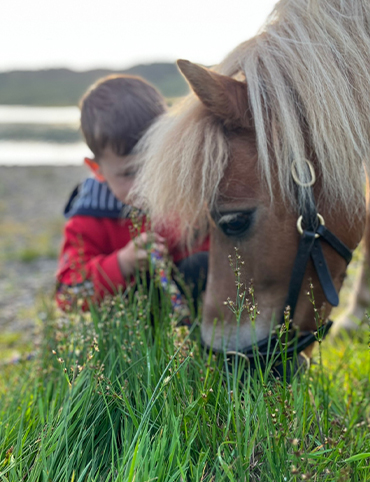
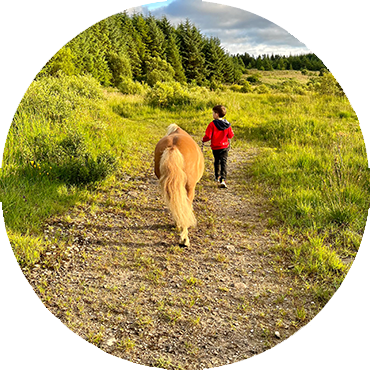
Equine Assisted Counselling (EAC) helps participants learn about themselves through working with horses. Through engaging in the therapy, participants learn how to identity, process and reflect on their own thoughts, feelings, behaviours and patterns of behaviour in their own lives. My model of Equine Assisted Counselling (EAC) is Integrative. Participant’s programmes are person centred to meet their needs. The therapy works at the participants own pace. EAC is experiential in nature, therefore participants are more likely to retain the new learning. No previous equine experience is needed and no horse riding is required. EAC improves mental and emotional health. It is beneficial in treating depression, anxiety, bereavement, loss, low self-esteem and anger management. Participants notice an increase in self-confidence, communication skills, developing empathy, a greater ability to manage behaviour and increased awareness in one’s personal development. This is a unique approach to therapy which incorporates Horses, a Counsellor and Participant in a collaborative effort to facilitate emotional growth and learning.
What Can I Expect?
Personal experience, tailored to the individuals needs in a safe, supportive and genuinely caring environment. With the long supported techniques of Gestalt Therapy , the horses and the practitioner, you will learn about the therapeutic process, as well as the theoretical and practical path of how horses support change. In doing so, participants will discover the benefits of a special relationship that is unique, alive and grounded in the present.
Why do we use horses?
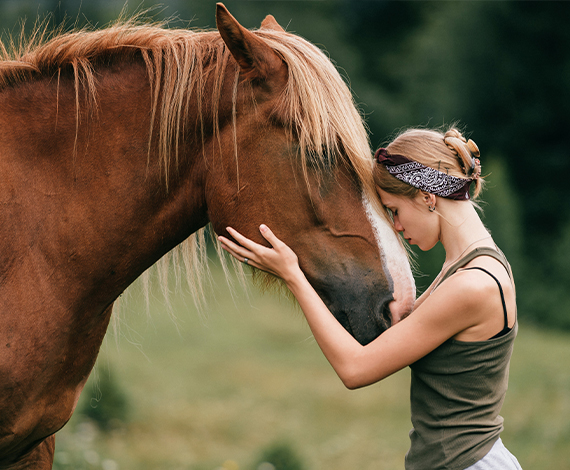
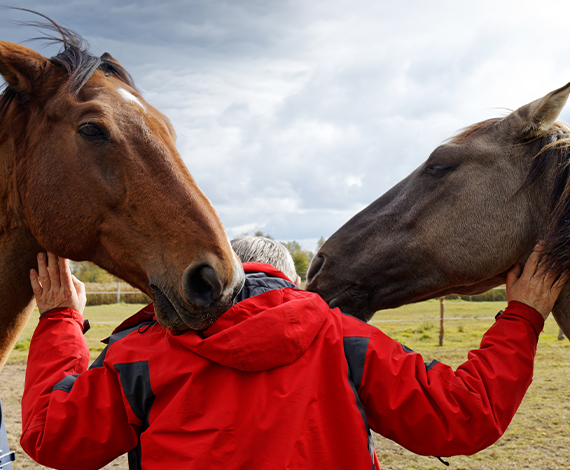
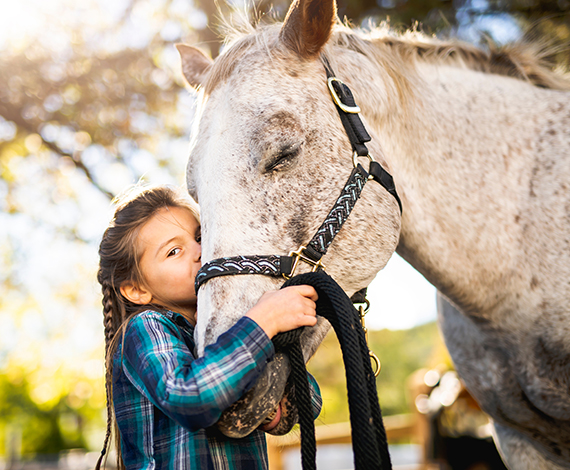
Naturally intimidating to many, horses are large and powerful. This creates a natural opportunity for some to overcome fear and develop confidence. Working alongside a horse, in spite of those fears, creates confidence and provides wonderful insight when dealing with other intimidating and challenging situations in life. Like humans, horses are social animals, with defined roles within their herds. They would rather be with their peers. They have distinct personalities, attitudes, and moods; an approach that works with one horse won’t necessarily work with another. Most importantly, horses mirror human body language. Many complain, “This horse is stubborn. That horse doesn’t like me,” etc. The lesson is that if they change themselves, the horses respond differently. Horses are honest, which makes them especially powerful messengers.
How does it work?
Equine Assisted Counselling encourages individuals to develop a self-awareness that will promote empowerment, health and balance in life.
There is something about the outside of a horse that is good for the inside of a man

Address :
Stranorlar, County DonegalTelephone :
087 955 4266E-mail :
shaunaconaghan@hotmail.com